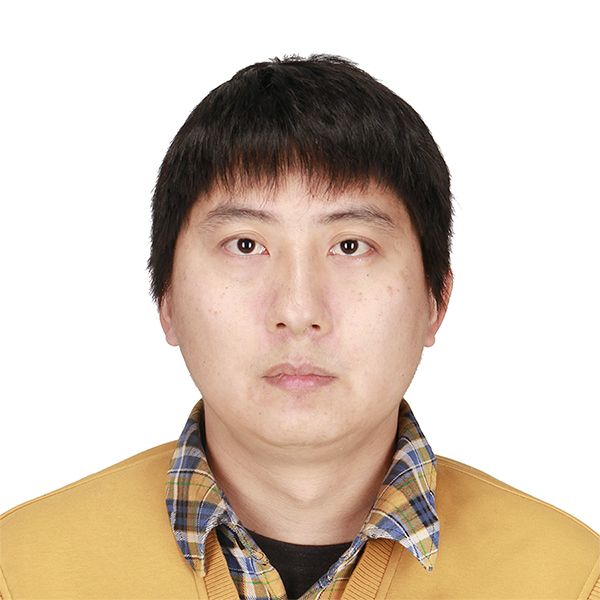
Achieving quantum computational advantage is the main motivation of building quantum computing.Besides the development of experiments, theoretical studies are also vital to achieve this goal. There are two types of theoretical researches along: 1. finding the useful applications using quantum algorithms which is hard to achieve by classical computers; 2. designing better quantum error correction codes. Along type 1, I focus on quantum machine learning by combining ideas and techniques from statistical physics, quantum foundation and computational complexity theory, such as path integral quantization, quantum contextuality and polynomial hierarchy. I also study variational method for quantum many-body problems based on quantum circuits. Along type 2, I'm working on designing quantum error correction decoder and studying how to improve code performance based statistical mechanical models and algorithms, and tensor network methods. Besides the above research, I'm also studying how to combine 1 and 2 together, namely integrating quantum algorithm design and error correction together. This has produced a result that extend the code distance to arbitrarily large In addition, I expand a new research direction: how to use physics to understand modern AI technology. One example we have done is to use non-equilibrium physics to understand the current state-of-the-art AI model for image and video generation: diffusion models. And we have also on-going work to utilize canonical transformation from classical mechanics to study how to avoid gradient vanishing problem in deep neural networks while maintaining model's expressive power.
keywords
quantum computational advantage, quantum machine learning, quantum algorithms for quantum many-body and quantum chemistry problems, quantum error correction, statistical physics of generative AI
CSCI 3090 - Introduction to Quantum Computing
Primary Instructor
-
Spring 2024 / Spring 2025 / Spring 2026
Covers the basics of quantum computation, including the basics of quantum information; axioms of quantum mechanics; quantum circuits and universality; the relationship between quantum and classical complexity classes; simple quantum algorithms such as the quantum Fourier transform; Shor factoring algorithm; Grover search algorithm; physical implementation of quantum computation; error correction and fault tolerance. Same as PHYS 3090 and ECEN 3090.
PHYS 1110 - General Physics 1
Secondary Instructor
-
Fall 2024
First semester of three-semester sequence for science and engineering students. Covers kinematics, dynamics, momentum of particles and rigid bodies, work and energy, gravitation, and simple harmonic motion. Degree credit not granted for this course and PHYS 1115.
PHYS 3090 - Introduction to Quantum Computing
Primary Instructor
-
Spring 2024 / Spring 2025 / Spring 2026
Covers the basics of quantum computation, including the basics of quantum information; axioms of quantum mechanics; quantum circuits and universality; the relationship between quantum and classical complexity classes; simple quantum algorithms such as the quantum Fourier transform; Shor factoring algorithm; Grover search algorithm; physical implementation of quantum computation; error correction and fault tolerance. Same as CSCI 3090 and ECEN 3090.
PHYS 7810 - Special Topics in Physics
Primary Instructor
-
Fall 2025
Various topics not normally covered in the curriculum; offered intermittently depending on student demand and availability of instructors. May be repeated up to 9 total credit hours.